
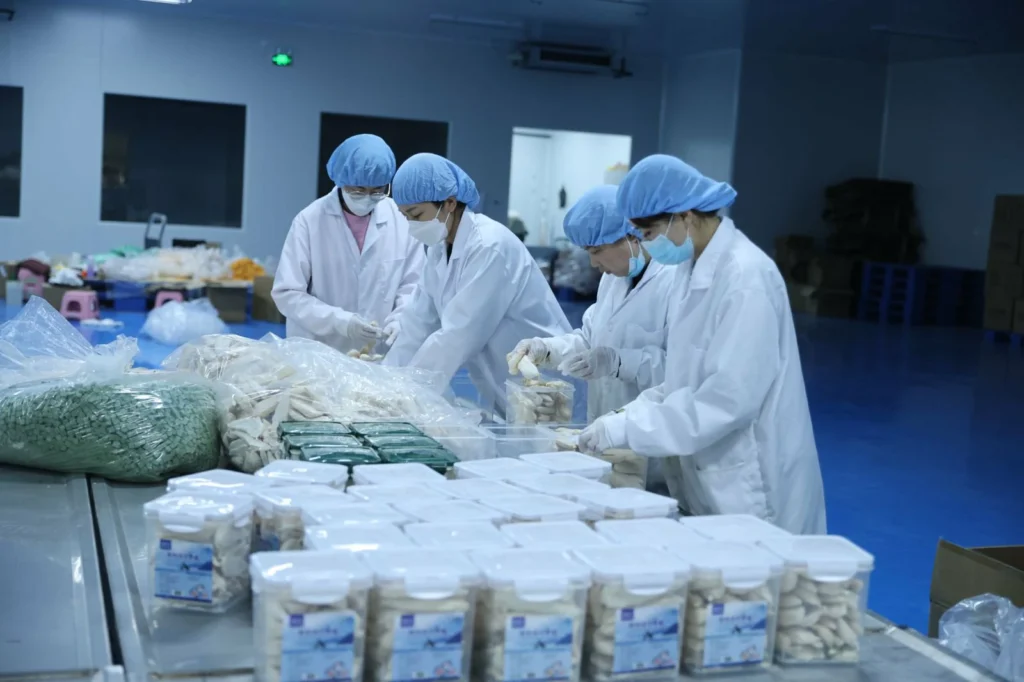
For a private-label pet treat project, packaging is part of the product brief. A finished design may look convincing on screen while important details remain unresolved: the net weight, the selected recipe, the number of designs in the order or the person responsible for approving label information.
A packaging review should bring these decisions together before production is confirmed. The purpose is to create one agreed pack specification that the brand and manufacturer can both use.
1. Confirm the product and net weight first
Identify the exact product specification that the packaging will contain. State the target net weight and whether you are planning a retail pack, a bulk pack or multiple configurations. Keep each configuration clearly named in the brief and quotation.
If you are choosing among several shapes or recipes, do not assume one artwork file can be finalized for all of them. Resolve the product identity and required product information for each pack before treating the design as approved.
2. Discuss the packaging format with the manufacturer
Describe how you intend to present and distribute the product, then ask the supplier to review suitable packaging options for that brief. Clarify what is included in the proposed pack and which details still require confirmation.
If you have a particular material or closure in mind, provide the requirement rather than relying on a visual mockup. A photograph of a pouch shows its appearance, but does not establish its material specification or suitability for your selected product.
3. Assign responsibility for label information
Agree who will prepare product descriptions, ingredient information, instructions and other required pack content. Identify the destination market and the languages needed. Arrange the appropriate market-specific review before approving the final files.
Keep the product specification and label content connected. If the recipe or product name changes after artwork has been prepared, review the affected content again rather than assuming the previous approval still applies.
4. Use a controlled artwork approval process
Request the manufacturer’s artwork requirements before your designer prepares the production files. Distinguish a presentation mockup from the file that will be used for the pack. Give every revision a clear name or version reference.
Review readable content, logo placement and the agreed product identity together. Assign one person to consolidate feedback so the supplier does not receive conflicting instructions from different teams. Record the final approved version in the order documentation.
5. Define the order configuration
State the number of product variants and artwork designs in the proposed order. Specify the quantity associated with each configuration and clarify any packing or outer-carton requirements relevant to your distribution plan.
Ask for a quotation and production plan that refer to these exact configurations. When a pack weight, design or quantity changes, check what else needs to be reviewed. A change to the launch assortment can affect more than the visual design.
6. Link packaging approval to the project schedule
Agree the sequence of product approval, artwork approval and production confirmation. Ask which unresolved decisions would prevent the project from moving forward. Avoid setting a delivery expectation around a design that is still being revised.
Before confirming the order, check that both teams have the same product specification, pack details, artwork version, quantity and delivery scope. Keep the approved record accessible to the people who will manage the project after the initial enquiry.
Start with the pack you actually intend to launch
A focused first brief is easier to review than a collection of possible future designs. Choose your priority configuration, document the open questions and discuss additional variants separately. This gives the manufacturer a clearer basis for samples, quotation and planning.
BSG’s OEM / ODM page outlines the project discussion from brief to dispatch. Send our team your product category, pack weight, artwork status and estimated quantity to begin reviewing your private-label packaging requirements.