

Freeze-dried and air-dried treats offer different textures, but the process name alone cannot establish nutritional quality. For a useful comparison, look at the finished product, the evidence behind each claim and the specification agreed with the supplier.
Choose a format around texture and intended use, then verify moisture, water activity, nutrient composition and the manufacturer’s safety controls. Published study results are context—not BSG product test results.
1. What changes during drying?
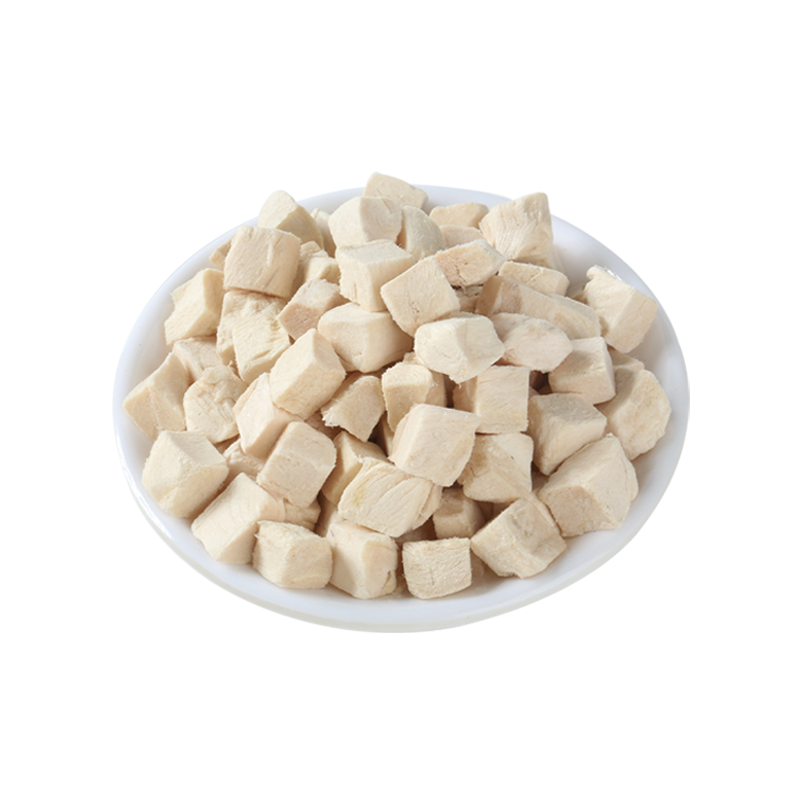
Freeze-dried
Frozen water is removed mainly by sublimation under reduced pressure. This can preserve a more open structure and produce a light, porous texture.
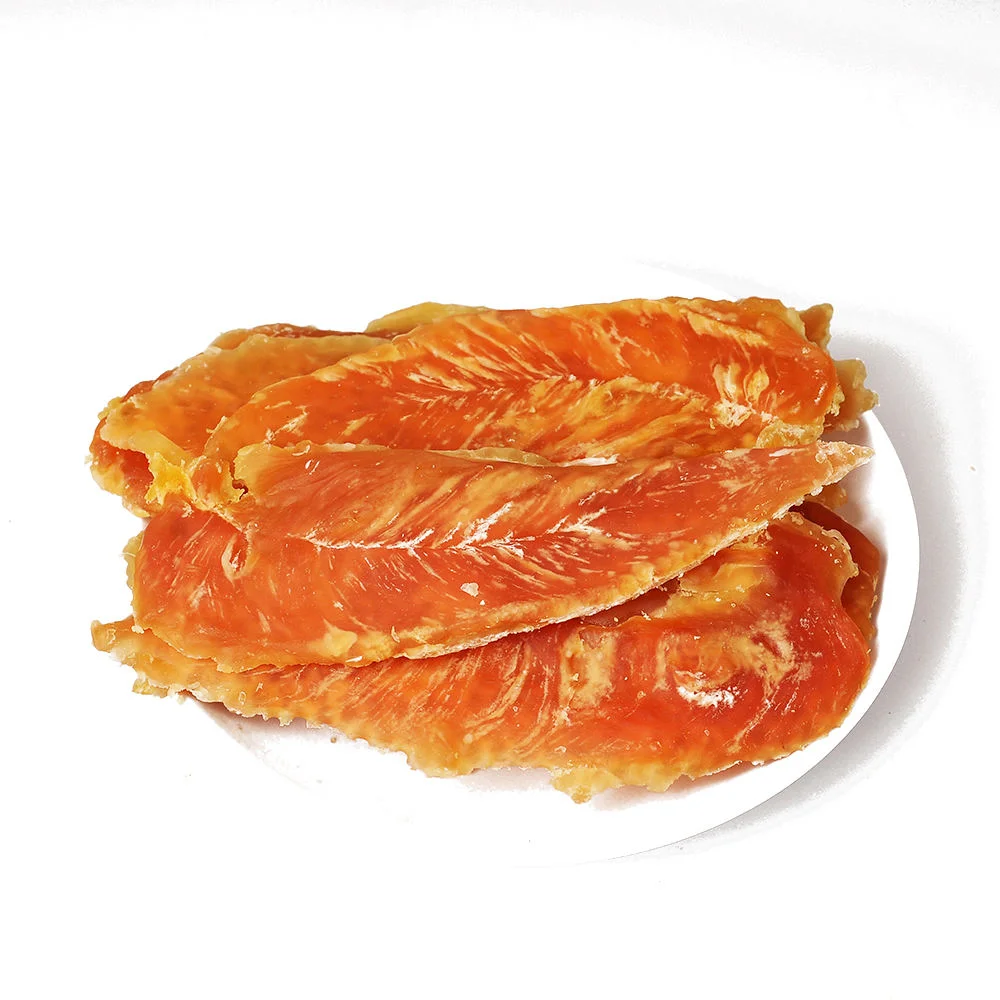
Air-dried
Moving air removes moisture by evaporation. Temperature, airflow, time and piece thickness influence the final texture and degree of shrinkage.
In a 2024 chicken-breast experiment, hot-air drying produced more shrinkage and darker surfaces than freeze-drying. Here, “air-dried” refers to controlled convective drying; commercial processes vary. [1]
Images: BSG media-library products, shown to illustrate the formats. These were not the samples used in the cited research.
2. Two measurements that matter
Szymanska and colleagues compared hot-air and freeze-dried chicken breast, including untreated and ultrasound-pretreated samples. Across the tested treatments, both methods achieved the values below. [1]
| Measurement | Study result |
|---|---|
| Water content | Below 8.3% |
| Water activity (aw) | Below 0.44 |
These findings describe that experiment. They are not universal targets, BSG specifications or proof of a particular shelf life.
Water content measures how much water is present; water activity describes its availability. Codex defines low-moisture foods as aw ≤ 0.85 and explains that pathogens can survive even when growth is inhibited. Its cited code concerns human food; the underlying principle is useful context, not a pet-food compliance certificate. [3]
3. Read digestibility figures in context
A 2024 feeding study used 10 adult beagles over five 35-day periods. Apparent total-tract crude-protein digestibility was 89.83% for a hybrid freeze-dried diet and 94.17% for another freeze-dried diet. [2]
What the study does—and does not—show
The diets differed in ingredients and nutrient composition. No air-dried diet was tested, and these were dog diets rather than a trial of BSG treats. The authors also reported recurring diarrhoea in most dogs on one freeze-dried diet. Higher digestibility therefore does not establish better tolerance or overall health, nor rank all drying methods.
4. Turn the comparison into a product brief
For a freeze-dried or air-dried project, request a specification that answers four practical questions:
- Format: What ingredients, dimensions and texture are required?
- Measured quality: What moisture and water-activity limits apply, and how are they checked?
- Nutrition: Are nutrient values reported as-fed or on a dry-matter basis? What evidence supports any digestibility claim?
- Storage and safety: What process validation, packaging and shelf-life evidence supports the finished product?
For BSG’s current options, explore freeze-dried chicken cubes and air-dried chicken jerky, or discuss a product specification with our team.
References
- Szymanska I. et al. (2024). Chicken-breast drying study comparing hot-air and freeze-drying with ultrasound pretreatment. Foods, 13(17), 2850. Read the paper.
- Geary E. L. et al. (2024). Dog-food format, nutrient digestibility and fecal outcomes. Translational Animal Science, 8, txae163; Table 2. Read the paper.
- Codex Alimentarius (2015). Code of Hygienic Practice for Low-Moisture Foods, CXP 75-2015; introduction and definitions. Read the code.